

Musicals are a kind of anointed prayer that brings the spirit of the people together. Two of “Wicked” are the most beloved characters in the theatre, Glinda and Elphaba. They were first born in Gregory Maguire’s novel and later they became a Broadway hit. They represent two completely different human qualities that cannot exist apart from each other. One, bright and seemingly superficial, the “Good Witch,” is a person by the name of Glinda who is smart, optimistic, and wants to please. Elphaba, from a completely different point of view, the unknown “Wicked Witch of the West”, is a source of rebellion, intelligence, and the utmost commitment to delivering the fair and just. The multi-level relations between them provide a different way of looking at such problems as identity, the role of morality, and the forces influencing our evaluations of good and bad in society, for instance.
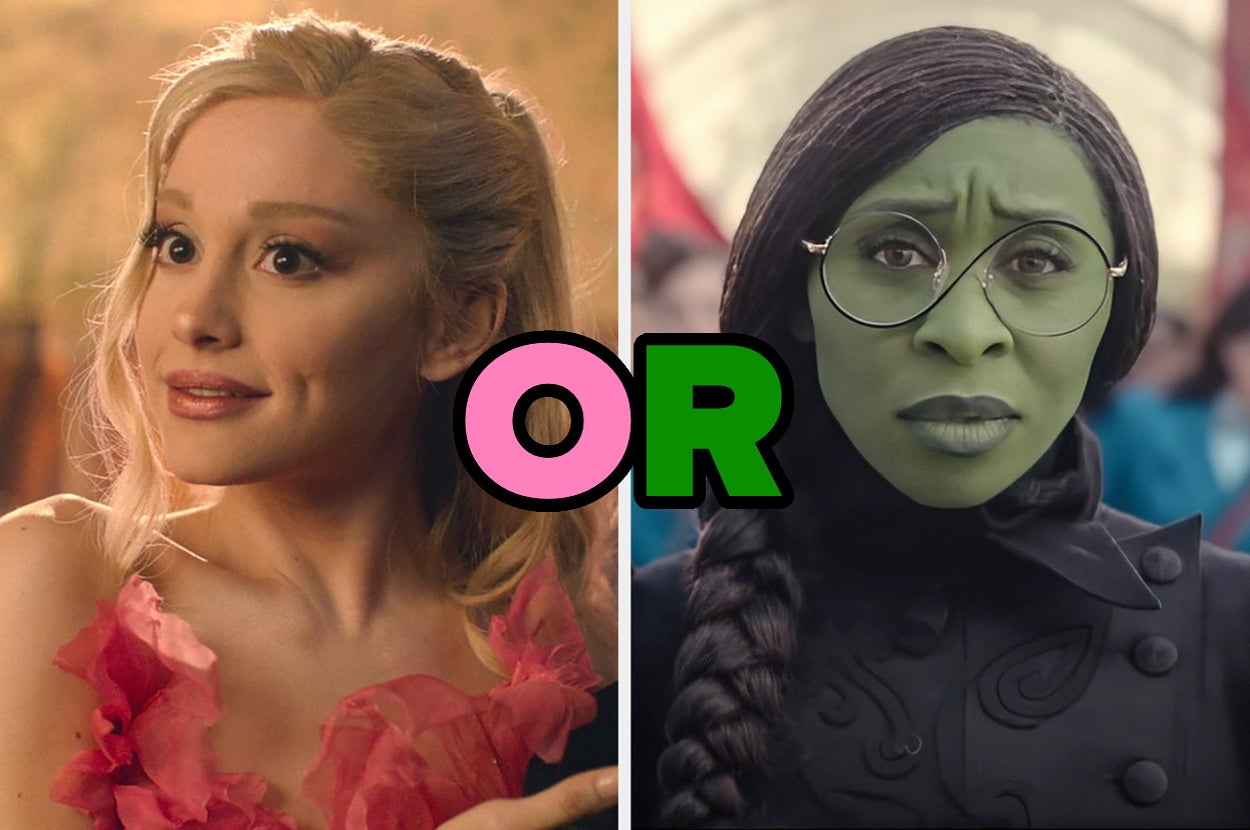
Wicked showcases the vibrant and magical Land of Oz, however, the thriving of incomplete information and knee-jerk assumptions is prevalent. The chronicles reveal the histories of these two women, showing how their decisions and experiences took them to different paths. It is through the examination of Glinda and Elphaba that we can see not only their features but also the wider significance of their stories. Their antithesis is the result of which causes us to think about our identities and the typical community stereotypes that are often bestowed upon us. They, as well, by their tribulations and glories, induce query and reflection about the nature of kindness and cruelty which will eventually move us towards a fuller understanding of ourselves.
Key Takeaways
- Glinda and Elphaba are two essential characters in the musical “Wicked” who depict different aspects of this world.
- Glinda is a girl who is famous because of her charm, popularity, and quest for acceptance, while Elphaba is known because of her intelligence, independence, and strong sense of justice.
- The process of self-reflection can unveil a person which character they relate to more and, consequently, make them understand their qualities and values like honesty, loyalty, and so on.
- Becoming a “wicked” individual signifies accepting and celebrating the distinctive traits that set them apart from others.
- By evoking both the characteristics of Glinda and Elphaba, people may be able to achieve the best part of themselves, which is essential to live a meaningful life.
The Qualities of Glinda
Social Savvy and Desire for Connection
Glinda’s personality doesn’t revolve around her looks but is rather a result of her yearning for social bonding and love. Glinda possesses a great capacity to make friendships easily, thus she manages to clinch social leadership among her mates through a relevant understanding of the key components of friendship.
A Capacity for Growth and Self-Awareness
Glinda’s journey attests to her ability to grow and develop. She learns about her privilege through the eyes of her friendship with Elphaba, stumbling upon the ugliness of her own advantages and the consequences of her actions. The woman transforms herself especially when she joins Elphaba and asks for their help in the case of danger, thus proving loyalty that goes beyond normal social norms.
A Reminder of the Complexity of Human Relationships
Glinda’s progressive journey from an egoistic noblewoman to a more understanding creature exposes the range of human interactions and potential transformations in all of us. She is a perfect example of how someone can be a kind of person with several aspects; the way some things happen, the decisions, and the people, create me. Goodness’ essence lies in the fact that it is a very rich, multifaceted thing that is shaped by personal experiences and an individual’s reaction to them, rather than some sort of a stiff, imposed thing.1
The Qualities of Elphaba
Elphaba, as the name suggests, epitomizes qualities that go beyond ordinary perceptions of morality. She stands out right from the start as someone new who is not yet understood by the people she lives with. She is a highly intelligent green-skinned girl who is very independent and makes her own, in some way, lonely, way through university and generally feels like an outsider. She senses the sharp contrast between the standard immoral and the unjust, which the society prescribes and the neglected, oppressed, and marginalized for whom she cares. She thus becomes a socially and politically sensitive person. Her absolute loyalty to her own beliefs even if they are quite opposite from the objectives of her society’s norms is in a way a part of this situation. This stubbornness of hers makes each of us see her character rising to a higher level as she has a lot of reasons and internal fights in which she gets involved. She finds first love and learns the essence of family bonds. It was her dad’s refusal to accept her green color which increased her low confidence in her interactions. Nevertheless, her maturation processes going in the opposite direction of the common teenage norm leads to her seasonings as a fascinating figure.
Self-Reflection: Which Character Are You?
CharacterPersonality TraitsStrengthsWeaknessesHarry PotterBrave, loyal, determined courageous, resourceful, protectiveImpulsive, stubborn, recklessHermione GrangerIntelligent, logical, hard-working knowledgeable, quick thinker, loyalOverly critical, perfectionist, rigidRon WeasleyLoyal, humorous, caring loyal, humorous, caringInsecure, lazy, jealous
When we think of the characteristics of Glinda and Elphaba, the first thing we should be clear about is to find out which one may identify with us most. For some people, Glinda’s charm and social grace might resonate. Many individuals are only able to steer themselves through the maze of social scenes where they are honored and welcome. Being so, some people are tempted and thereby may end up with a compromise in the genuineness of their life, which is the same as Glinda’s choice. Instead, of life with the unfolding of the rest, one may come close to such a friend who would understand the requirement of time and might open up the door for you to be just who you are. On the other hand, there are Elphaba’s advocates who might be even more connected to the problems raised by a society that is in dire need of revamping its norms. It is also possible that the sensation of a loss of identity or self-discovery can be that crucial experience that changes the life of a person. Elphaba, as one who embraces all forms of justice, rings the true bell to those people who feel like being involved in the tedious process of gaining a new norm (in the case of their community) or fighting prejudices against others. Acknowledging such thoughts can foster greater understanding as it empowers people to examine their core values and drivers defining the way they relate with others.
Embracing Your Wicked Nature
Glinda’s and Elphaba’s wickedness is not about wickedness in the crude sense; it is their way of who they are, void of societal limitations and prejudice. There are characters on both sides of the spectrum who do bad and good things. Glinda being initially superficial and Elphaba being constantly in conflict with societal rules are examples of that wickedness. Not only does self-discovery enable one to be oneself, but it also fosters self-acceptance, tolerance, and self-love which are rewards of embracing the fact that no human is perfect. Proper expression of our wicked nature in most cases refers to facing our conflicts and lacks directly. The main idea is to find ourselves in a place where we haven’t been able to reach until now. We can take a closer look at the most vital factors that are involved in the feeling of dissonance in ourselves, by getting in touch with darker aspects of the self that we normally avoid. Someone who has always been considered “good” might be pressured to fit this image no matter what and face a major internal conflict when there are tough decisions they need to make. We can create an authentic self by confronting our shadow, the fear, and the darker intentions, and still embrace the light.
Finding Balance Between Glinda and Elphaba
Recognizing the Duality Within
The symbiosis of Glinda and Elphaba is an example of how we can get balanced inside us. Thus, every person has to be a good and a bad character of society. It just depends on social circumstances, personal values and choices to grade them. Those two characters crystallize very distinct and almost incompatible qualities, of which each can be the ghost of the other. Finding it is about understanding when to display the opposite sides of Glinda as well as Elphaba, who is brave and willing to fight for righteousness.
This idea of duality can significantly boost our life’s experiences tn looking through the lens of empathy and strength. For a successful eudaemonia state, people need to perform an internal examination and determine what they consider important and valuable. This means we are asking ourselves when it’s fitting to look for warmer interpersonal contacts to give us a sense of status and power—like Glinda—but also when it’s mandatory to regard our convictions as sovereign—like Elphaba.
Cultivating a Nuanced Approach to Life
Living life with these qualities is then the way that we can be able to live life in a more fulfilling and balanced way. This harmony, in turn, allows us to act as the closest companions to a person, and as well as advocates for the change that we want to see. It builds an all-around identity that mainly revolves around being kind to oneself and others.
Embracing Your Unique Wickedness
Embracing your unique wickedness, on the other hand, is about learning to appreciate what makes one different and not accepting society’s norms for one’s behavior. Each houses its one-of-a-kind features that can be regarded as unorthodox or even classified as “wicked” by his/her fellows; despite that, such individuals obtain life’s vital key-brutal honesty and satisfaction. Unlike her being given green skin for a mocking exhibition like one would normally think, Elphaba’s green skin becomes her power and a chance to expose the injustices. Just as the privilege to be unique and different exists in this part of the universe, love, acceptance, and acknowledgment can form in many ways—the involvement in art-making, the fight for the abolishment of prejudice, and the act of living with truth and without judgments. Encouraging people to run after ideas and lifestyles that resonate, embracing one’s wickedness, and celebrating one’s identity creates a community where being different is not a tool for isolation but for progress. In this environment, along with love celebrated as a universal social inducer, people are given the chance to be themselves and thus are stronger contributors to society.
Embracing Your True Self
Eventually, the individual tales of Glinda and Elphaba rejuvenate the lost belief in self-acceptance and the acknowledgment of one’s zaniness, imperfections, and insecurities. By learning to balance the existence of bad and good traits within ourselves we can live life with more authenticity and goals. These stories not only direct us to ponder our identities but they also counsel us to cherish those things that make us truly unique. In a world where the common representation of people is like boxes through which good and evil can be recognized, the giving of one’s true unique self means the rejection of these schemes in favor of a more subtle view of humanity. This brings responsivity to every moment of life, enabling us to accept our bright and dark sides, while showing compassion towards those who also journey through the stormy sea of identity. We do this by creating a broader symphony of human odyssey while helping diversity and complexity that may uniquely make each stand.
FAQs
What is the difference between Glinda and Elphaba?
Where Glinda and Elphaba are the main characters/protagonists of “Wicked,” which effectively modernizes/transforms “The Wizard of Oz.” Where Glinda is represented as the popular and adored “good witch,” Elphaba, by contrast, is the mistreated yet mighty “wicked witch.”
How are Glinda and Elphaba portrayed in the musical “Wicked”?
It is the fact that the development of Glinda is that she has already become very famous and has a good life. Elphaba, however, is no longer regarded as a positive character but a powerful woman, stubborn and courageous who is also called “the Wicked Witch of the West” in “The Wizard of Oz.”
What are the main characteristics of Glinda and Elphaba?
Glinda who is known for her bubbly and shiny personality, popularity, and her love for attention, while, on the other hand, Elphaba is defined by her intelligence, courage, and her strong sympathy for the oppressed.
How can I determine if I am more like Glinda or Elphaba?
Determining whether you are more similar to Glinda or Elphaba can be a personal reflection based on your characteristics, values, and experiences. Moreover, it may also depend on how the musical “Wicked” connects to you and how you understand its messages.